
 русский
 Español
 عربى



Elevator maintenance often takes place in areas that remain accessible to residents, employees, visitors, or other building users. Technicians need enough space to inspect equipment and carry out service tasks, while people passing through the area need clear visual signals that work is underway. Poorly arranged work zones can create confusion, obstruct access, and make routine maintenance more difficult to manage. Practical temporary barriers, combined with clear site procedures, help maintenance teams define working areas and keep surrounding movement more orderly.

Make the Work Area Easy to Recognize
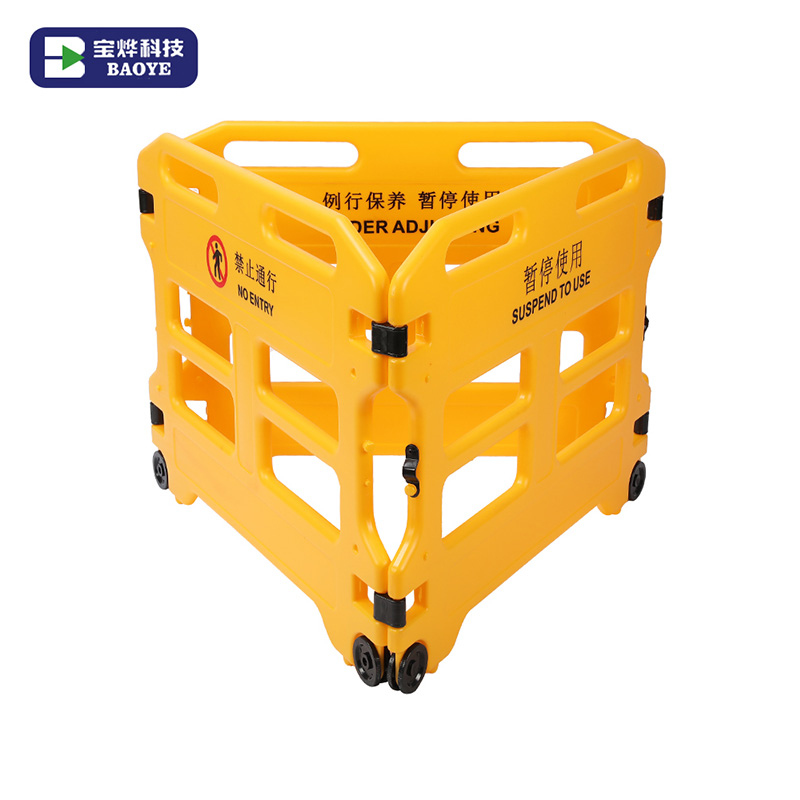
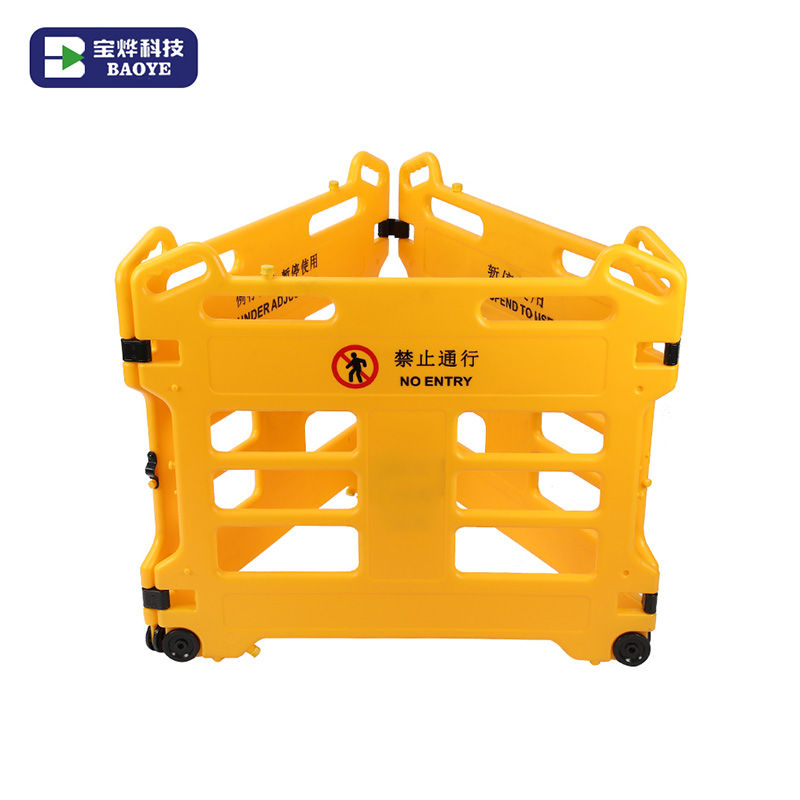
A maintenance zone should be identifiable before someone reaches the immediate work area. Clear colors, visible warning markings, and a barrier layout suited to the surrounding space can help communicate that access is restricted.
Visibility becomes particularly important in building entrances, narrow corridors, and elevator lobbies where people may approach from different directions. Manufacturers should consider the height, width, color contrast, and placement of warning information when developing temporary barriers.
Buyers should also evaluate the intended installation environment. A product designed for a spacious service area may require a different configuration from one used in a compact residential corridor.
Match Barrier Dimensions to Site Conditions
Elevator service locations vary in layout. Some provide generous space in front of the landing, while others have limited room for equipment, tools, and pedestrian movement. Barrier dimensions should therefore be considered alongside the available floor area.
A suitable configuration should help define the work zone without creating unnecessary obstruction outside it. Before purchasing, maintenance contractors can measure typical access points, identify narrow passages, and determine whether adjustable or modular arrangements would be useful.
For manufacturers, understanding these practical conditions helps guide decisions about panel dimensions, connecting components, and overall product configuration.
Balance Portability With Stability
Maintenance personnel may need to move barriers between floors or transport them alongside tools and service equipment. A portable structure can simplify deployment, but it must also remain stable when positioned for use.
Frame geometry, base dimensions, connection points, and material selection all influence how a barrier behaves. Manufacturers should assess these elements together instead of reducing weight without considering the effect on stability.
Buyers should review the product's intended operating conditions and follow its setup instructions. Barriers should be positioned on suitable surfaces and checked before use, especially when the working area has limited space.
Choose Materials for Repeated Handling
Temporary barriers may be folded, transported, stored, and deployed repeatedly. Material and surface-finish choices should account for these handling demands as well as the expected indoor or outdoor environment.
Manufacturers can evaluate frame rigidity, joint construction, resistance to surface wear, and the quality of protective coatings. Components that are easy to inspect and maintain can also support routine use across multiple maintenance teams.
For buyers, the right material choice depends on the frequency of deployment, storage conditions, transport requirements, and expected service life rather than appearance alone.
Consider Storage Between Maintenance Jobs
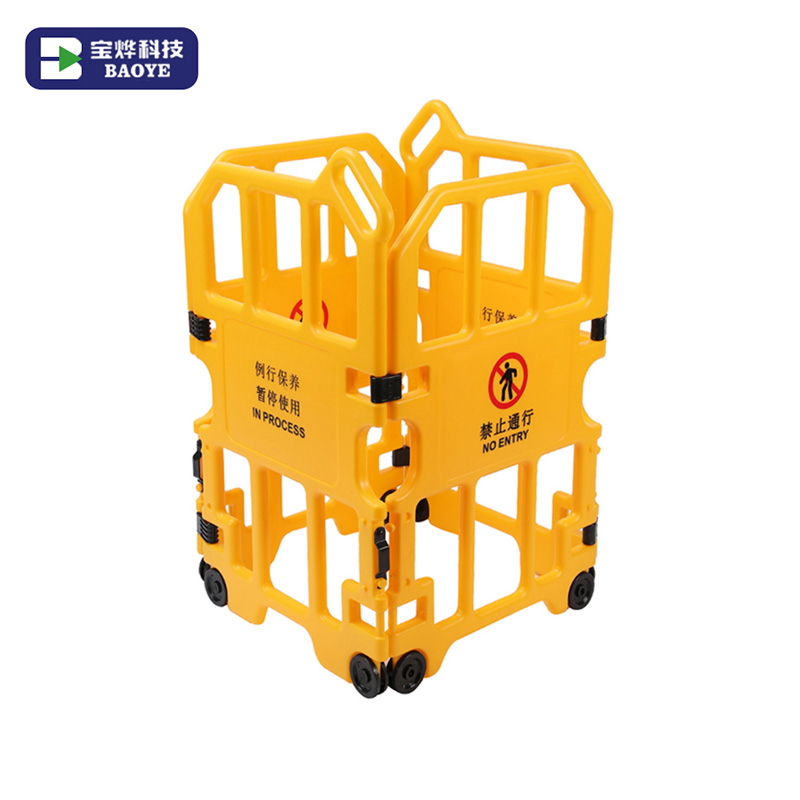
When not in use, barriers need to be stored without occupying excessive space or becoming difficult to access. Folding structures or detachable components may help maintenance teams organize equipment in service vehicles, storage rooms, or facility maintenance areas.
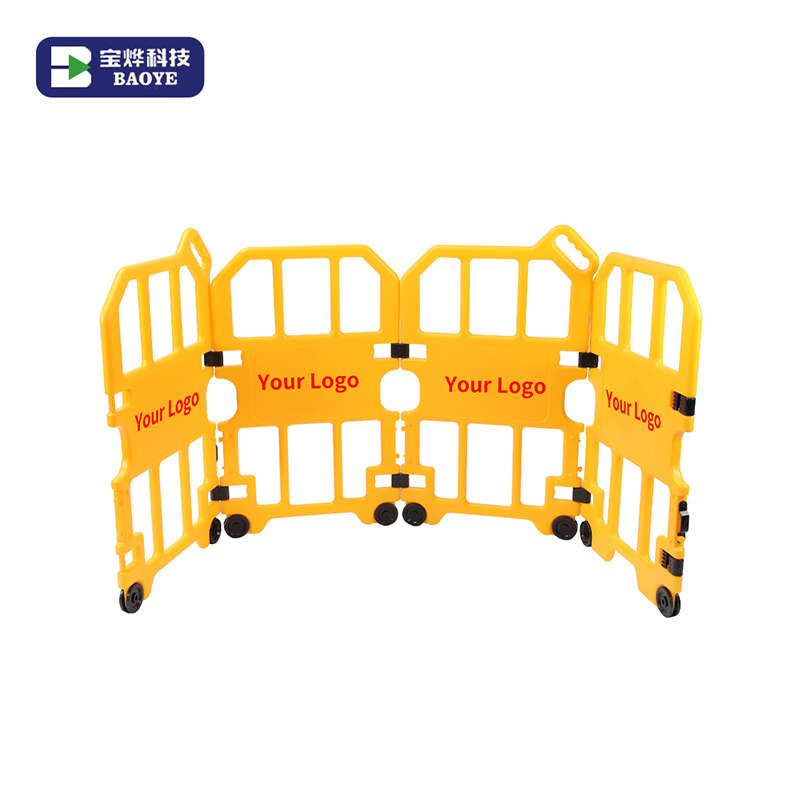
For buyers comparing an Elevator Maintenance Safety Barrier, folded dimensions, carrying arrangements, component retention, and setup requirements are useful specification points. Manufacturers should ensure that moving or connecting parts can be handled according to the product's intended design.
Packaging should also protect the structure during transportation and keep related components together to simplify deployment at the destination.
Inspect Function and Construction Before Delivery
A barrier's appearance alone does not establish whether it is suitable for repeated maintenance work. Production inspections should consider frame alignment, joint security, folding operation, base condition, visible surface defects, and the clarity of warning markings.
Manufacturers can establish inspection criteria according to the product design and intended application. Where the product includes locking or connecting mechanisms, their operation should be checked before packing.
Consistent inspection helps identify assembly problems and gives buyers a clearer basis for evaluating incoming goods.
Connect Product Design With Site Procedures
A well-designed barrier supports work-zone organization, but it does not replace site-specific safety procedures, access controls, or appropriate supervision. Maintenance teams need to position the barrier according to the task and the surrounding environment, then verify that the work area is clearly defined before service begins.
From a manufacturer's perspective, practical dimensions, visible markings, stable construction, and manageable storage all contribute to a more usable product. By matching barrier design to real maintenance conditions and maintaining consistent production checks, manufacturers can help buyers equip service teams with temporary protection that is easier to deploy, inspect, and manage.